
Learn · Training beyond the pool
Dry-land stretching for finswimmers
The fin kick loads the front of the thigh, the calves and the back of the leg in a way swimming alone does not. Three simple stretches help keep them supple between sessions.
Finswimming is not only pool work. Like every endurance and speed sport, it benefits from dry-land training: mobility, stretching, core strength and balance. This is the first lesson of a short series on these "accessory" activities, which finswimmers share with athletes of many other sports.
The exercises are shown by Viola Patrignani, one of the new names of Italian beach rowing: a good example of how athletes from different sports use the same basic routines.
1. Standing quadriceps stretch with balance
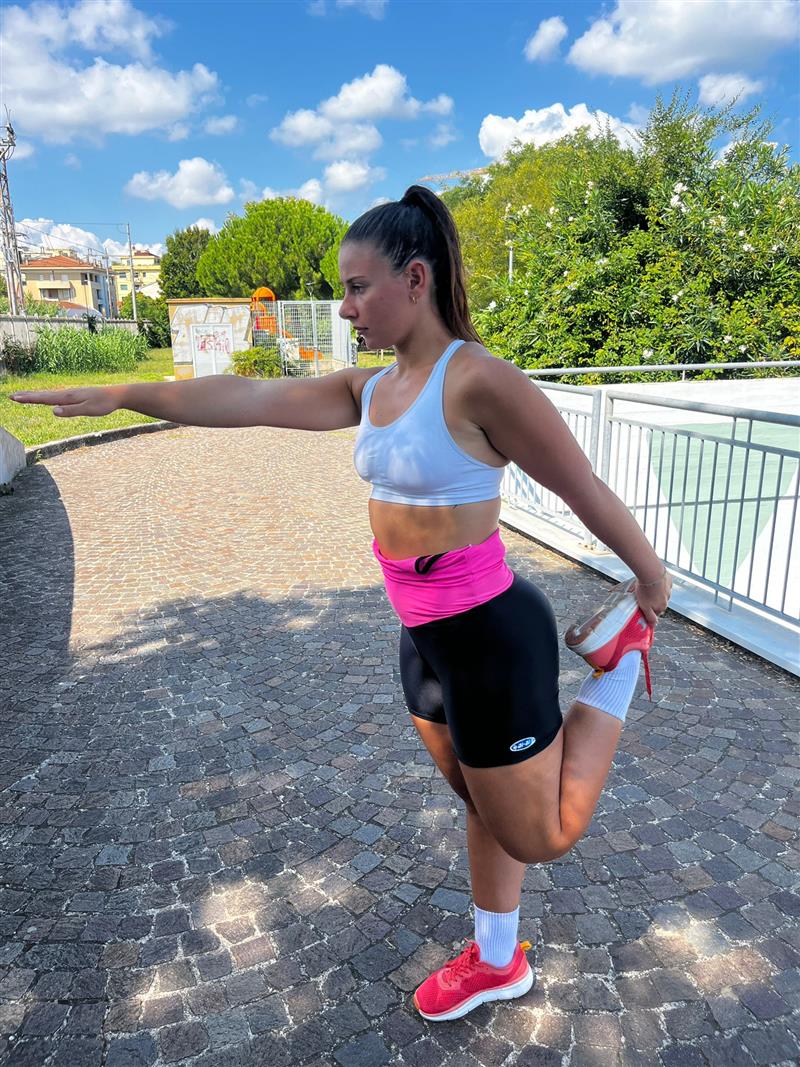
Stand on one leg, take the other foot behind you with the hand on the same side and bring the heel towards the buttock, knees close together. Reach forward with the free arm to keep your balance. Hold 20–30 seconds per side.
Why for finswimmers: the quadriceps drive the downward kick with both monofin and bi-fins; balancing on one leg also trains ankle stability.
2. Calf stretch against a wall
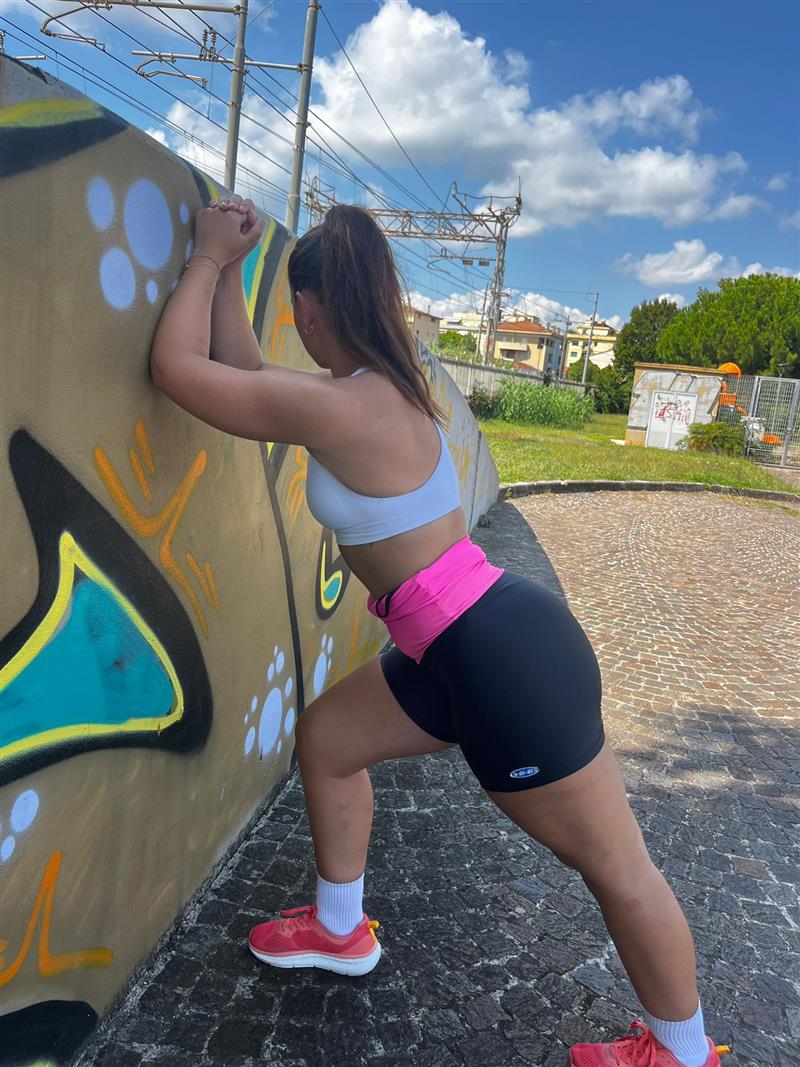
Hands on a wall, one leg forward and bent, the other straight behind you with the heel pressed to the ground. Move the hips forward until you feel the stretch in the calf of the back leg. Hold 20–30 seconds, then change legs.
Why for finswimmers: with fins on, the ankles stay extended for the whole session and the calves work continuously; cramps in the calf are one of the most common problems for beginners.
3. Hamstring stretch on a railing
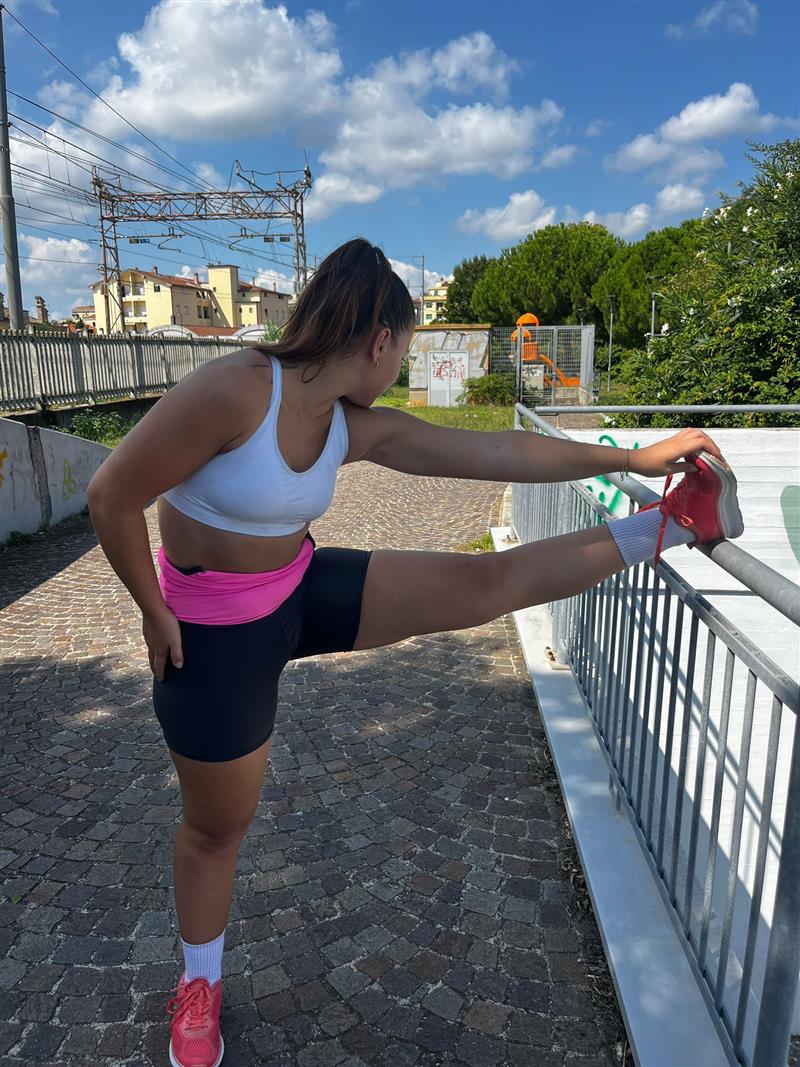
Rest one heel on a railing or bench at a comfortable height, leg straight. Keep the back long and lean forward from the hips, reaching towards the foot without forcing. Hold 20–30 seconds per side.
Why for finswimmers: the hamstrings work in the upward kick, and good flexibility at the back of the leg helps a long, relaxed undulation.
How to use these stretches
- Stretch after training or at the end of a dry-land session, when the muscles are warm.
- Breathe slowly and never bounce: the stretch should be clear but not painful.
- Two or three repetitions per side are enough.
These exercises are general guidance for healthy athletes. Adapt them to your age and level, and ask a coach or physiotherapist if you have pain or an injury.